


Report on the International Scientific Conference “Algorithmic Ethics, Human Dignity: Bioethical Challenges of AI”
University of Zielona Góra, 15–16 October 2026
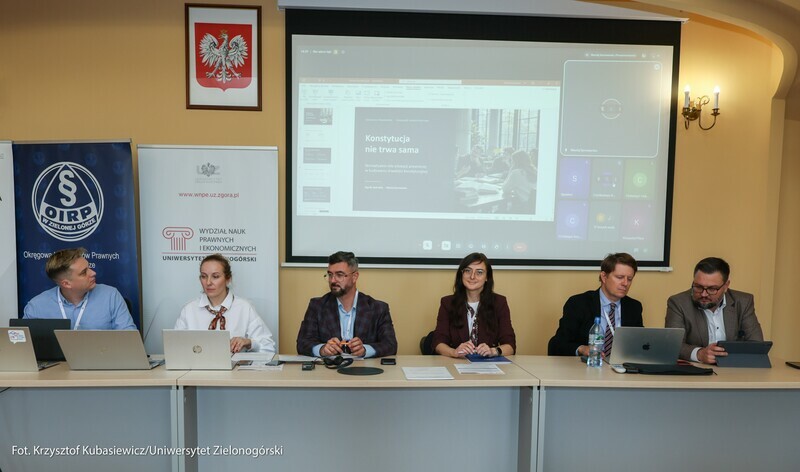
On 15–16 October 2026, the Institute of Legal Sciences at the Faculty of Law and Economics, University of Zielona Góra, hosted the International Scientific Conference “Algorithmic Ethics, Human Dignity: Bioethical Challenges of AI”.
The event followed the conference “Artificial Intelligence in Administrative Law: A Comparative Perspective”, held at the University of Zielona Góra on 16–17 April 2026. The October conference extended the debate to legal philosophy, bioethics and human rights. Its purpose was to facilitate an exchange of experience among scholars and practitioners in law, philosophy, ethics, medicine and other disciplines, with particular attention to human dignity, autonomy and accountability for AI-assisted decisions.
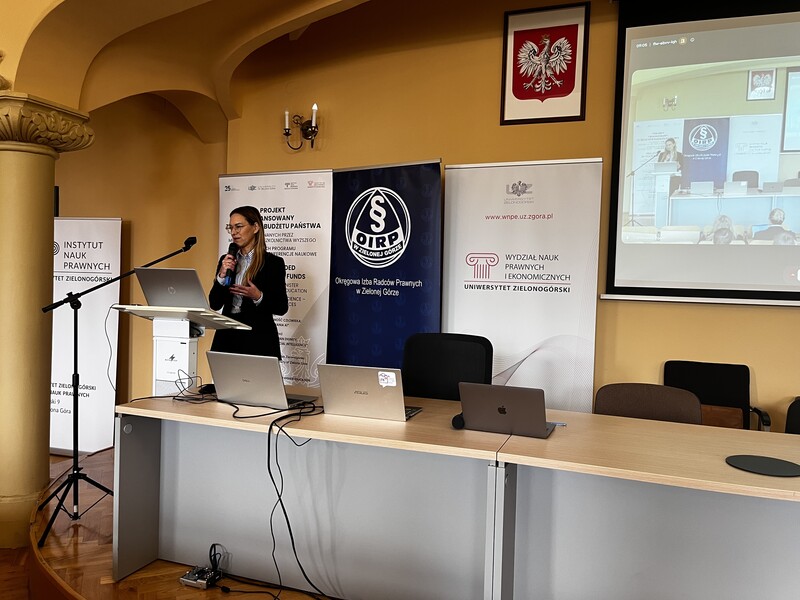
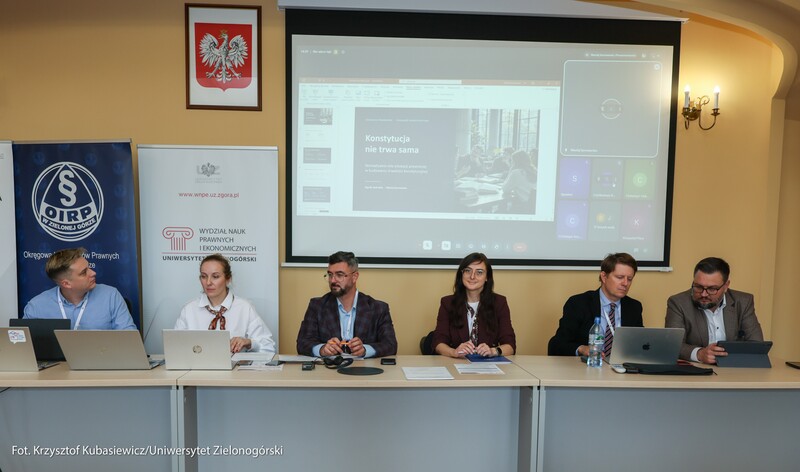
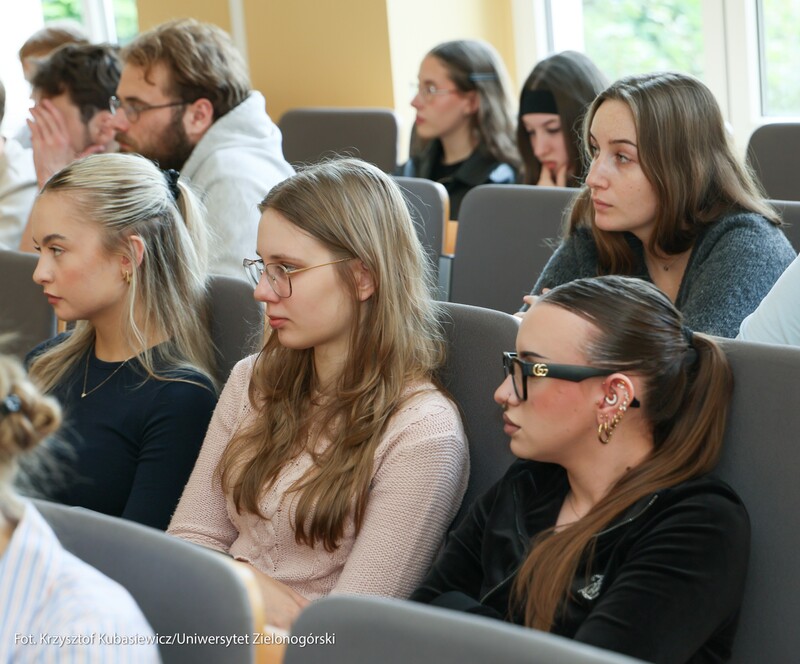
The conference brought together approximately 70 participants, including a substantial number of students, doctoral candidates, academics and legal practitioners. The programme comprised 32 papers (23 in the three sessions on the first day and nine at the Young Scientists’ Forum). According to the affiliations listed in the programme, speakers represented 17 universities and two research organisations, as well as a law firm. The universities were based in seven countries: Poland, Germany, the United States, Portugal, the United Kingdom, Vietnam and Cyprus. The hybrid format enabled both on-site and online participation.
The conference formed part of the project of the same title, funded by the Polish state budget under the “Wektory Nauki” (Science Vectors – Scientific Conferences) programme (agreement no. WNK/SP/0269/2025/01). The project runs from December 2025 to December 2026. Its leader and Chair of the Organising Committee was Professor Martyna Łaszewska-Hellriegel, Director of the Institute of Legal Sciences. prof. dr hab. E. Szewczyk served as Deputy Chair.
The conference was held under the honorary patronage of the Mayor of Zielona Góra, the Marshal of the Lubuskie Voivodeship and the Lubuskie Voivode. Institutional patronage was provided by the Regional Court in Zielona Góra, the District Chamber of Legal Advisers in Zielona Góra and the Regional Bar Council in Zielona Góra.
Opening of the conference
The conference was officially opened by Professor Justyna Patalas-Maliszewska, Vice-Rector for Research and International Cooperation at the University of Zielona Góra. The introductory part of the proceedings highlighted the need for responsible use of new technologies and the development of appropriate legal and ethical frameworks.
Day one – 15 October 2026
Session I – Algorithms in the Service of Humanity: The Ethical Foundations of AI
The first session, moderated by Professor Martyna Łaszewska-Hellriegel and Patricia Sharp, M.A., focused on the relationship between technological progress and human agency. Professor Sylwia Wojtczak (University of Łódź) addressed human enhancement technologies, Professor Winfried Huck (Ostfalia University of Applied Sciences) examined the imperfections of AI, human action and legal systems, and Dr Jennifer Maaß (CISDL, SDGLA) explored the protection of human dignity in algorithmic optimisation.
Professor Phuc Dao (Vietnam National University, Ho Chi Minh City) discussed consumer protection in the age of AI in Vietnam, while Professor Martin Compton (University of East London) explored inconsistencies in human attitudes towards AI. Dr Ioannis Michaloudis and Dr Thomas Philips (American University of Cyprus) examined self-determination and democracy in the algorithmic age, and Dr Stelios Skourlis (American University of Cyprus) addressed AI applications in cultural heritage. Professor Dominik Bierecki (Pomerania University in Słupsk) compared the proportionality of AI supervision under EU and Vietnamese law.
The discussion following the session provided an opportunity to compare ethical and legal perspectives, particularly on the limits of automation, human agency and accountability for AI systems.
Session II – AI in Healthcare: Opportunity or Threat?
The second session, moderated by Dr Joanna Zdanowska, focused on the legal and bioethical implications of AI in medicine. Professor Ewa Baum (Poznań University of Medical Sciences) addressed ethical aspects of AI in medicine, while Professor Jędrzej Skrzypczak (Adam Mickiewicz University in Poznań) examined challenges associated with brain–computer interfaces. Dr Monika Matecka (Poznań University of Medical Sciences) discussed psychological well-being, and Dr Piotr Bromber (University of Zielona Góra) explored the impact of technology and disinformation on trust in healthcare.
Professor Michał Urbańczyk (Adam Mickiewicz University in Poznań) examined early US court rulings on liability for AI in medicine. Professor Susanna F. Fischer (The Catholic University of America) discussed the protection of human dignity against deepfake-related threats under US law.
The discussion following the session provided an opportunity to connect the effectiveness of new technologies with patient protection, autonomy, professional responsibility and the importance of trust in the physician–patient relationship.
Session III – Human Rights and Automation: The Limits of Regulation
The third session, moderated by Dr Anna Chodorowska and Professor Paweł Kuczma (University of Zielona Góra), addressed the constitutional and human rights dimensions of automation. Dr Claudia Pinto Ribeira (University of Porto) discussed epistemic autonomy and the limits of delegating tasks to AI in education. Professor Maciej Serowaniec and Dr Jagoda Jaskulska (Nicolaus Copernicus University in Toruń) examined legal education and constitutional resilience, while Professor Aleksandra Kustra-Rogatka (Nicolaus Copernicus University) addressed digital constitutionalism and the AI Act.
Dr Dobrochna Ossowska-Salamonowicz (University of Warmia and Mazury in Olsztyn) and Professor Ewa Tuora-Schwierskott (Jan Długosz University in Częstochowa) addressed media accountability and responses to disinformation. Professor Thomas Heinrich Musiolik (University of the Arts Berlin) discussed human rights in the context of automated power, while Dr Filip Cyuńczyk and Professor Piotr Piesiewicz (SWPS University) explored responsibility in professions of public trust in the algorithmic age. Dr Agata Pyrzyńska (University of Szczecin) examined the impact of AI on voting rights. Dr Grzegorz Góralczyk and Dr Anna Chodorowska (University of Zielona Góra) analysed the use of AI in the administration of justice in light of fair trial guarantees.
The discussion closing the first day enabled participants to compare domestic and international perspectives and reflect on the effectiveness of constitutional safeguards, human oversight and accountability mechanisms in automated environments.
Day two – 16 October 2026
Young Scientists’ Forum
The second day was devoted to the Young Scientists’ Forum, moderated by Professor Izabela Gawłowicz (University of Zielona Góra). The Forum enabled doctoral candidates, early-career researchers and practitioners to present their research and discuss it in an international setting.
Krzysztof Pikul, M.A. (University of Zielona Góra), addressed accountability for AI-assisted administrative decisions, Sonia Pikul, M.A. (University of Zielona Góra), examined human dignity in human spaceflight, and Patricia Sharp, M.A. (University of Zielona Góra), discussed AI-based risk assessment in psychiatric admission without patient consent. Amelia Konieczna-Bagińska, M.A., and Miłosz Bagiński-Żyta, M.A., examined informed consent to medical services in the context of AI regulation.
Mateusz Wicher (Nicolaus Copernicus University), examined the effectiveness of human oversight of AI. Dr Tomasz Turowski and Dr Katarzyna Bartosiak (Institute of Philosophy, University of Zielona Góra) explored philosophical aspects of moral responsibility and the ethical implications of generative AI. Martyna Winiarska, M.A. (University of Zielona Góra), addressed accountability for algorithmic errors in healthcare, while Juan Riofrio, M.A. (The Catholic University of America) discussed attribution, source transparency and the right to dialogue in the context of AI.
The Forum discussions offered an opportunity to exchange comments on the research questions presented and the methods used to analyse them. They also provided a setting for developing contacts between early-career and experienced researchers.
Conclusions and scientific significance
The discussions accompanying the different parts of the programme were an important feature of the conference. They facilitated an exchange of experience across disciplines and legal systems and helped identify issues requiring further research. The substantial student attendance and involvement of early-career researchers also highlighted the educational dimension of the event.
The proceedings highlighted the need to combine legal, ethical, philosophical and medical perspectives in AI research. The protection of human dignity and autonomy, transparency of algorithmic decisions, accountability for errors and meaningful human oversight are of particular importance. The conference provided a basis for further interdisciplinary and international academic cooperation.
Papers developed from the conference presentations will be considered for publication in the peer-reviewed journal Prawo i Więź, subject to the journal’s review procedure. The post-conference publication is planned to be made available in open access.
The organisers thank the speakers, moderators, members of the Scientific and Organising Committees, institutional partners and all participants for their contribution to the conference and the international academic debate.
Photo gallery
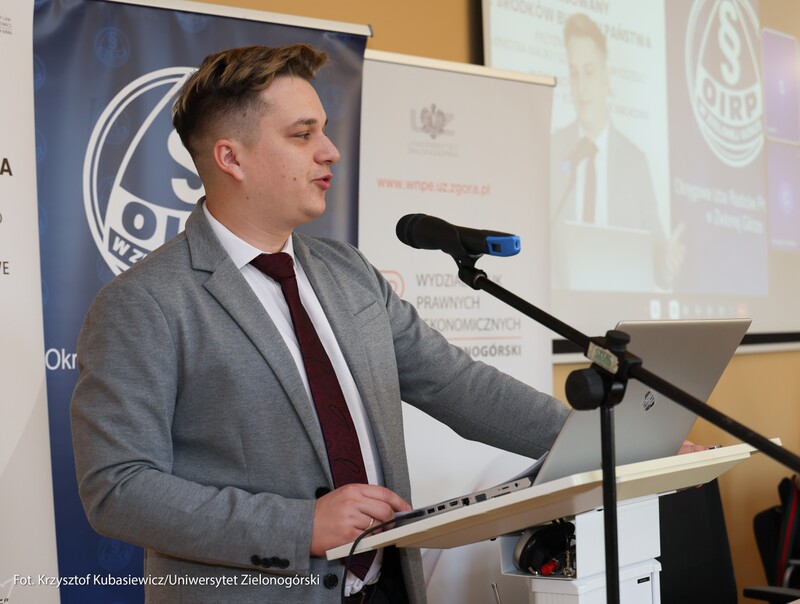
Full photo gallery and report on the University of Zielona Góra website (19 October 2026)
Funding acknowledgement
Projekt finansowany ze środków budżetu państwa, przyznanych przez Ministra Nauki i Szkolnictwa Wyższego w ramach programu „Wektory Nauki”.
Agreement number: WNK/SP/0269/2025/01
Total project value: 38 869,86 zł
Funding from the Minister of Science and Higher Education: 31 018,46 zł